
Cooling towers play a critical role in many industrial operations. However, they are also among the most biologically active components of any water system. Due to their open design and constant exposure to warm, nutrient-rich water, cooling towers naturally attract microorganisms such as algae, bacteria, and slime-forming species. For facilities working with cooling tower system suppliers in UAE, controlling this biological growth is essential to maintaining performance, safety, and asset protection.
At Hydroguard, extensive field experience has shown that understanding microbial behavior in cooling water is the first step toward effective and sustainable control.
Why Cooling Towers Encourage Biological Growth
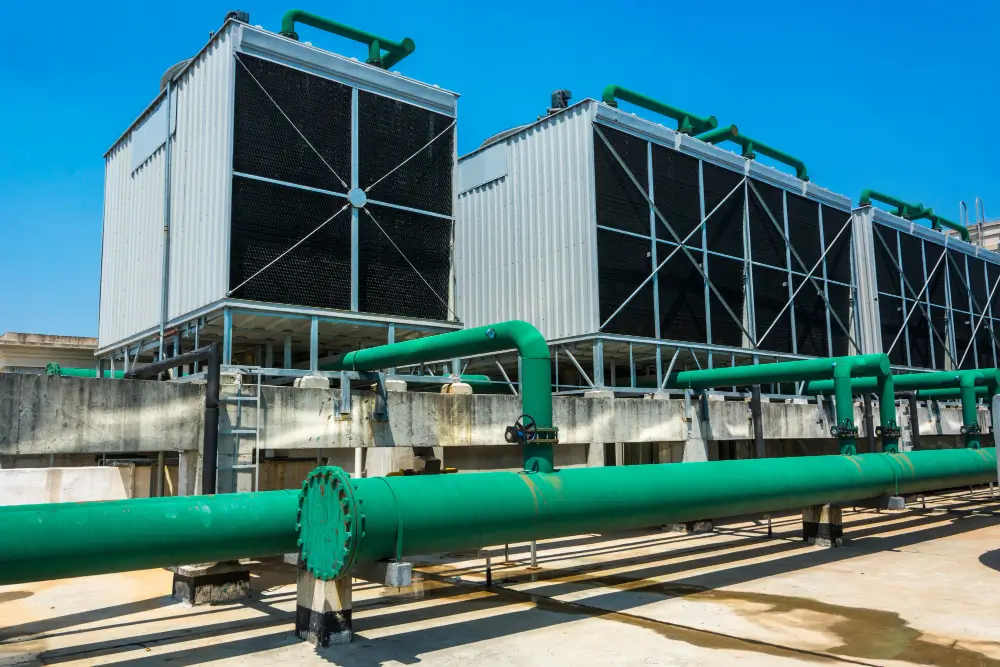
Unlike closed-loop systems, cooling towers continuously draw in air, dust, and organic matter from the surrounding environment. At the same time, sunlight, elevated temperatures, and nutrients present in makeup water create ideal conditions for microbial growth. As a result, algae can form visible films in basins within days, while bacteria establish biofilms on fill media, piping, and louvers.
This growth goes beyond appearance. Biological contamination can significantly impact system operation by reducing heat-transfer efficiency, blocking nozzles and strainers, and increasing energy consumption. In addition, slippery surfaces increase safety risks for maintenance personnel. Therefore, facilities working with cooling tower suppliers in UAE must address biological growth as a core operational concern.
When Microorganisms Lead to Corrosion and Health Risks
If left unmanaged, biological growth can lead to serious mechanical and safety issues. One major concern is Microbiologically Influenced Corrosion (MIC). Certain bacteria, particularly sulfate-reducing species, create localized environments that accelerate metal deterioration. These organisms often live within biofilms, which shield them from basic disinfection methods. Over time, MIC can cause pitting, leaks, and costly equipment failure.
Equally important is the risk of Legionella pneumophila. Warm cooling water provides favorable conditions for this bacterium, which is responsible for Legionnaires’ disease. Without effective treatment and monitoring, Legionella levels can rise to dangerous thresholds. For this reason, cooling tower maintenance services in the UAE increasingly emphasize proactive biological control.
Proven Methods to Control Biological Activity in Cooling Towers
At Hydroguard, biological control strategies are practical, proactive, and tailored to each system’s operating conditions. The approach focuses on prevention, consistency, and measurable results.
Oxidizing Biocides
Carefully controlled doses of oxidizing biocides, such as chlorine or bromine, are used to rapidly reduce broad microbial populations. This step prevents rapid regrowth and maintains baseline control.
Non-Oxidizing Biocides
Some organisms and mature biofilms resist oxidizers alone. Therefore, non-oxidizing biocides are applied to target resistant microbes within protected biofilm layers.
Biofilm Disruption
Biofilms shield microorganisms and reduce treatment effectiveness. By using biodispersants to break down biofilm structures, hidden microbes become exposed. As a result, biocides work more efficiently and consistently.
Smart Dosing and Automation
Automated dosing systems deliver biocides at precise intervals and concentrations. This approach prevents under-treatment, which allows microbes to rebound, and avoids over-treatment, which increases chemical waste and cost.
Continuous Testing and Monitoring
Routine testing, including Total Bacterial Count and Legionella monitoring, confirms treatment effectiveness. Visual inspections and corrosion tracking further help refine the program over time. This structured approach aligns closely with best practices followed by cooling tower system suppliers in UAE.
The Benefits of Effective Biological Control
When biological growth remains under control, cooling tower performance improves across multiple areas. Heat exchange surfaces stay cleaner, which enhances thermal efficiency. Water distribution becomes more uniform, and energy consumption decreases as pumps and fans operate under optimal conditions. In addition, corrosion rates slow, extending equipment life and protecting capital investments. Most importantly, health risks associated with opportunistic pathogens are significantly reduced.
Rather than addressing symptoms after problems arise, Hydroguard focuses on preventing biological issues before they disrupt operations.
Conclusion
Biological growth management is a critical element of cooling tower reliability and safety. For facilities working with cooling tower installation in UAE projects or ongoing system operation, proactive microbial control protects efficiency, reduces costs, and minimizes risk. As industrial systems grow more complex, the role of cooling tower system suppliers in UAE extends beyond equipment supply to long-term performance support.
By applying structured treatment programs, continuous monitoring, and system-specific strategies, Hydroguard helps facilities maintain cleaner, safer, and more efficient cooling tower operations over the long term.