
Recirculating /Chilled Water Treatment
Closed Recirculating /Chilled Water Treatment
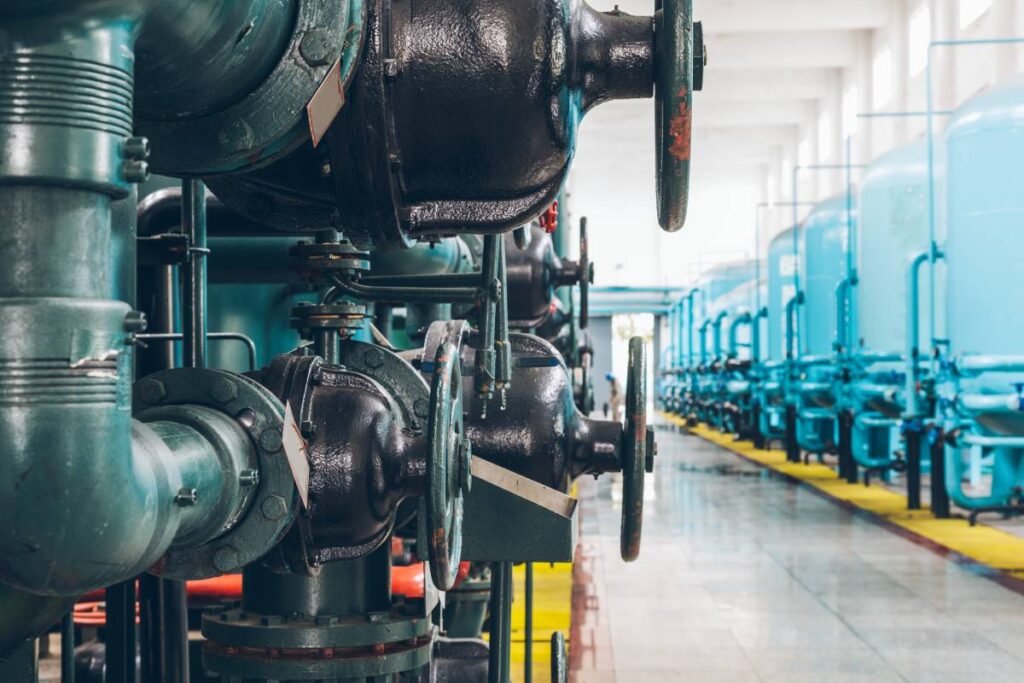
A closed-loop water system, also known as a closed recirculating cooling water system or closed recirculating circuit, is an engineered network designed for efficient thermal control in industrial applications. Unlike open systems, the circulating fluid in a closed recirculating water system remains isolated from the atmosphere, thereby minimising evaporation, contamination, and oxygen pressure. Water (or a water-glycol mixture, depending on process requirements) is continuously pumped through heat-generating equipment, where it absorbs process heat, and is subsequently cooled before being reintroduced into the closed recirculating cooling water system. This cyclic operation significantly reduces make-up water demand, improves heat transfer efficiency, and optimises resource utilisation.
The thermal load in Closed recirculating systems is typically rejected through a plate-and-frame or shell-and-tube heat exchanger, where energy is transferred to an auxiliary open loop, which then dissipates it to the atmosphere via cooling towers or other heat rejection devices. By isolating the process fluid, a closed recirculating cooling water system mitigates scaling, corrosion, and fouling potential, thereby extending equipment service life and maintaining stable thermal performance. These systems are integral to sustainable water management strategies in power generation, chemical processing, HVAC, and heavy industries, where reliability, efficiency, and conservation are critical operational drivers. Effective chemical treatment and monitoring by a professional Water Treatment Company further enhance system reliability and long-term operational efficiency.
Product Name
Composition
Comments
Corro Guard 440
Nitrite based corrosion inhibitor
Passivation chemical for closed loop
Corro Guard 400
Molybdate based corrosion inhibitor
Closed system corrosion inhibitor (Mb)
Corro Guard 400 MAX
Nitrite and molybdate based treatment
Closed system corrosion inhibitor (Ni+Mb)
Corro Guard 410
Nitrite and phosphate based treatment
Closed and semi open system scale & corrosion inhibitor
Corro Guard 420
Benzotriazole based Corrosion Inhibitor
Copper treatment for closed system corrosion inhibitor
Corro Guard 424
Tolyltriazole based Corrosion Inhibitor
Copper and copper alloy treatment
Corro Guard 434
DEG and BTZ based Corrosion Inhibitor
Corrosion and freeze protection for steel, copper, and aluminum components
Product Name- HYDROGUARD
Description
Application
Product Details
Corro Guard 440
Nitrite based corrosion inhibitor
Passivation chemical for closed loop
Corro Guard 400
Molybdate based corrosion inhibitor
Closed system corrosion inhibitor (Mb)
Corro Guard 400 MAX
Nitrite and molybdate based treatment
Closed system corrosion inhibitor (Ni+Mb)
Corro Guard 410
Nitrite and phosphate based treatment
Closed and semi open system scale & corrosion inhibitor
Corro Guard 420
Benzotriazole based Corrosion Inhibitor
Copper treatment for closed system corrosion inhibitor
Corro Guard 424
Tolyltriazole based Corrosion Inhibitor
Copper and copper alloy treatment
Corro Guard 434
DEG and BTZ based Corrosion Inhibitor
Corrosion and freeze protection for steel, copper, and aluminum components
FAQs
Improperly treated water in a closed recirculating cooling water system leads to scale deposition, corrosion, and microbial fouling, reducing heat exchanger efficiency and increasing energy consumption. HydroGuard provides specialised chemical programs for Closed recirculating systems that protect chillers and piping networks, ensuring long-term, energy-efficient operation.
Scale deposits reduce heat transfer efficiency and increase operating costs in a closed recirculating water system. HydroGuard uses antiscalants, dispersants, and water hardness control strategies to prevent scale formation and maintain optimal system performance.
Corrosion in closed recirculating cooling water systems is controlled through corrosion inhibitors, oxygen scavengers, and pH stabilisation. Regular water analysis allows the team to fine-tune chemical dosing in real time, protecting metal surfaces from pitting and erosion.
stagnant water zones, warm operating temperatures, and nutrient availability encourage biofilm growth in Closed recirculating systems. HydroGuard applies oxidizing and non-oxidizing biocides, supported by routine monitoring, to prevent fouling and ensure clean, efficient system operation.
By preventing scaling, corrosion, and microbiological fouling in closed recirculating cooling water systems, HydroGuard delivers maximum heat transfer efficiency, energy savings, reduced maintenance costs, and extended equipment lifespan.
Ready to talk about water treatment?
Contact us
Please complete this form and we will be in touch